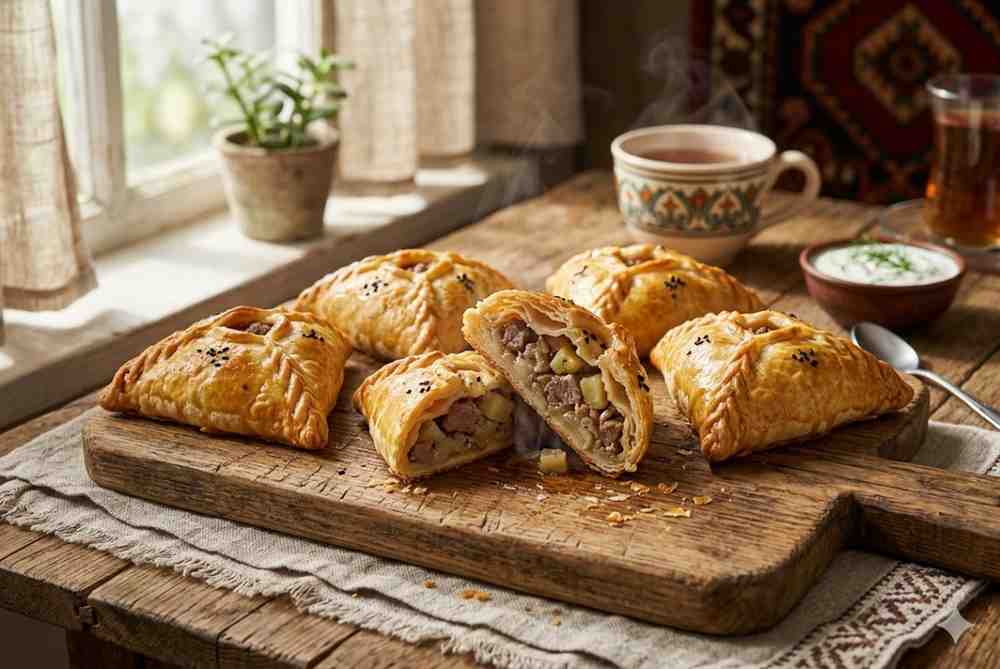
Echpochmak: The Triangular Treasure of Tatar Cuisine
Lisa Park • October 27, 2026
In the vast and diverse culinary landscape of Eurasia, some dishes quietly carry centuries of history within their folds—literally. Echpochmak is one such gem. At first glance, it may seem like a simple pastry, but this humble, triangular delight tells a story of nomadic traditions, resourceful cooking, and the rich heritage of the Tatar people.
What Is Echpochmak?
Echpochmak (pronounced roughly as ech-poch-mak) is a traditional baked pastry filled with a mixture of meat, potatoes, and onions. Its name comes from the Tatar language, meaning “triangle,” which perfectly describes its distinctive shape.
Unlike many stuffed pastries where the filling is pre-cooked, Echpochmak is unique because the raw filling cooks inside the dough as it bakes. This allows the ingredients to release their juices, creating a rich, flavorful interior that’s both hearty and comforting.
Origins: From the Steppes of Tatarstan
Echpochmak originates from the Republic of Tatarstan in Russia, a region where Turkic and Slavic cultures intersect. Historically, the Tatars were semi-nomadic people, and their cuisine reflects practicality and nourishment.
Portable, filling, and easy to prepare in batches, Echpochmak was ideal for life on the move. Over time, it became a staple in Tatar households and an iconic symbol of their culinary identity.
Today, you’ll find it in homes, bakeries, and restaurants across Tatarstan and beyond.
The Anatomy of Echpochmak
What makes Echpochmak so satisfying is its simple yet perfectly balanced composition:
- The Dough: Soft and slightly enriched, the dough can be yeast-based or unleavened. It bakes into a golden, slightly crisp exterior while remaining tender inside.
- The Filling: Traditionally made with lamb or beef (finely chopped, not minced), diced potatoes, and onions for sweetness and moisture. The ingredients are seasoned simply—usually just salt and pepper—allowing their natural flavors to shine.
- The Signature Opening: A small hole left at the top allows broth or melted butter to be added during baking, enriching the filling and keeping it moist.
Cooking Process: Technique Meets Tradition
Making Echpochmak is both an art and a ritual:
- The dough is rolled into small circles.
- The raw filling is placed in the center.
- The edges are folded into a triangular shape, leaving a small opening at the top.
- The pastries are baked until golden brown.
Midway through baking, some cooks add a spoonful of broth into the opening—a step that elevates the flavor and texture. The result is a pastry that’s crisp on the outside, juicy and savory on the inside.
Flavor Profile: Comfort in Every Bite
Echpochmak doesn’t rely on bold spices or complex seasoning. Instead, it delivers:
- Richness from the meat juices
- Earthiness from potatoes
- Sweetness from onions
- Warmth from its freshly baked dough
It’s the kind of food that feels like home, even if you’re trying it for the first time.
Cultural Significance
In Tatar culture, Echpochmak is more than just a snack—it’s a symbol of hospitality and tradition. It’s often served during family gatherings, celebrations, and holidays.
Preparing it can be a communal activity, with family members gathering to chop, fill, and shape the pastries together. This shared process adds another layer of meaning to the dish.
Variations and Modern Twists
While the traditional version remains beloved, modern adaptations have emerged:
- Chicken instead of lamb for a lighter taste
- Vegetarian versions with mushrooms or lentils
- Cheese-filled variations for a richer twist
Despite these innovations, the classic meat-and-potato combination continues to dominate.
Echpochmak vs. Other Stuffed Pastries
You might be tempted to compare Echpochmak to samosas, empanadas, or pirozhki—and while they share similarities, Echpochmak stands apart because of:
- Its triangular shape
- The use of raw filling
- The signature top opening for added broth
These details give it a unique identity among global pastries.
Why You Should Try It
If you enjoy hearty, comforting foods with a cultural story behind them, Echpochmak is worth exploring. It’s approachable, satisfying, and deeply rooted in tradition.
For home cooks, it’s also a rewarding project—simple ingredients, but a technique that feels special.
Final Thoughts
Echpochmak is a reminder that great food doesn’t need to be complicated. With just a handful of ingredients and a thoughtful approach, it delivers warmth, flavor, and a sense of connection to a rich cultural heritage.
Whether you encounter it in a Tatar kitchen or try making it yourself, this triangular pastry offers more than just a meal—it offers a taste of history, wrapped in golden dough.