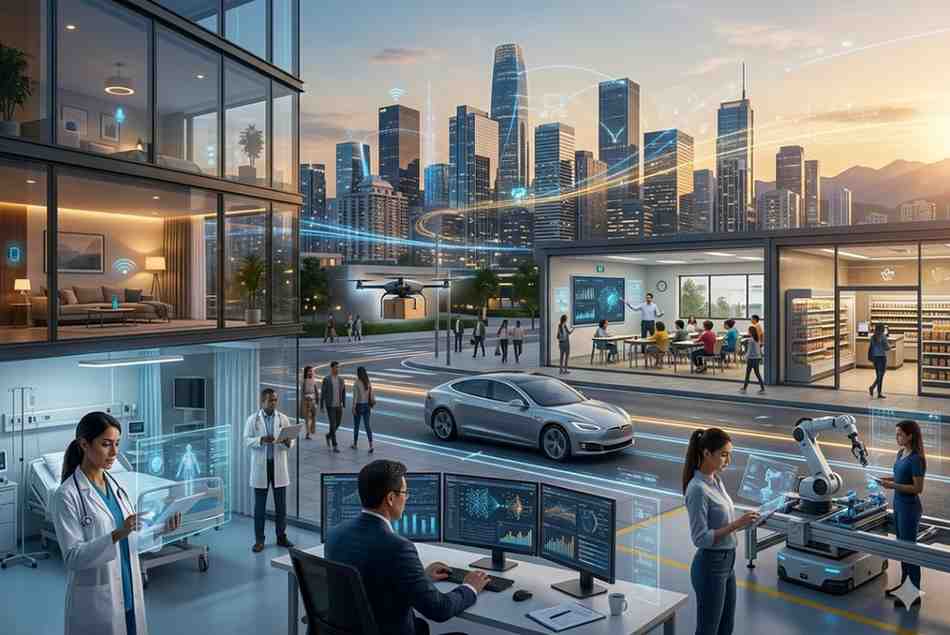
Key Areas Where Artificial Intelligence Is Used: Transforming the Modern World
Lisa Park • October 27, 2026
Artificial Intelligence (AI) is no longer a futuristic concept confined to science fiction—it is a powerful, practical force shaping how we live, work, and interact with the world. From the apps on your phone to complex industrial systems, AI is quietly embedded in countless aspects of daily life.
Understanding where AI is used helps reveal not only its capabilities but also its growing importance across industries. Let’s explore the key areas where AI is making a significant impact.
1. Healthcare: Smarter Diagnosis and Better Care
AI is revolutionizing healthcare by improving accuracy, efficiency, and patient outcomes.
- Analyzing medical images (X-rays, MRIs) to detect diseases early
- Predicting patient risks and recommending treatments
- Assisting in robotic surgeries
- Managing hospital workflows and patient records
AI systems can process vast amounts of medical data far faster than humans, helping doctors make more informed decisions. In some cases, AI can even identify patterns that might be missed by the human eye.
2. Finance: Faster, Safer, and Smarter Decisions
The financial sector has embraced AI to enhance security and optimize decision-making.
- Fraud detection through unusual transaction patterns
- Algorithmic trading based on real-time market data
- Credit scoring and risk assessment
- Personalized financial advice via chatbots
AI enables banks and financial institutions to operate more efficiently while reducing risks and improving customer experience.
3. Retail and E-Commerce: Personalized Shopping Experiences
AI has transformed how consumers shop, especially online.
- Product recommendations based on browsing history
- Dynamic pricing strategies
- Inventory management and demand forecasting
- Virtual assistants for customer support
When you see “recommended for you” suggestions, that’s AI working behind the scenes to tailor your shopping experience.
4. Transportation: Driving Toward Autonomy
AI is at the core of modern transportation innovations.
- Self-driving vehicles using computer vision and sensors
- Traffic prediction and route optimization
- Ride-sharing algorithms that match drivers and passengers
- Logistics and supply chain optimization
These technologies aim to make transportation safer, faster, and more efficient.
5. Education: Personalized Learning at Scale
AI is reshaping education by adapting learning to individual needs.
- Intelligent tutoring systems that adjust to student performance
- Automated grading and feedback
- Learning analytics to identify strengths and weaknesses
- Language translation and accessibility tools
This allows students to learn at their own pace while giving educators valuable insights.
6. Entertainment and Media: Content That Knows You
AI plays a major role in how content is created and consumed.
- Movie and music recommendations
- Content creation (scripts, music, art)
- Video editing and special effects
- Audience behavior analysis
Streaming platforms rely heavily on AI to keep users engaged by suggesting content tailored to their preferences.
7. Manufacturing: Smarter Production Lines
AI is driving the shift toward “smart factories.”
- Predictive maintenance to prevent machine failures
- Quality control using image recognition
- Automation through robotics
- Supply chain optimization
This leads to increased efficiency, reduced costs, and improved product quality.
8. Agriculture: Feeding the Future
AI is helping farmers increase productivity while using fewer resources.
- Crop monitoring using drones and sensors
- Predicting weather patterns and yields
- Automated irrigation systems
- Pest and disease detection
These innovations are crucial for meeting the food demands of a growing global population.
9. Cybersecurity: Defending the Digital World
As cyber threats grow more sophisticated, AI is becoming essential in defense.
- Detecting anomalies and potential breaches
- Identifying malware and phishing attempts
- Automating threat response
- Monitoring network activity in real time
AI systems can react faster than human teams, making them invaluable in preventing attacks.
10. Customer Service: Always-On Support
AI-powered chatbots and virtual assistants are transforming customer interactions.
- 24/7 availability
- Instant responses to common queries
- Reduced workload for human agents
- Consistent service quality
This improves customer satisfaction while lowering operational costs.
11. Smart Homes and IoT: Everyday Convenience
AI is at the heart of smart home technology.
- Voice assistants controlling devices
- Smart thermostats learning user preferences
- Security systems with facial recognition
- Energy optimization
These systems make homes more convenient, efficient, and secure.
12. Human Resources: Smarter Hiring and Management
AI is streamlining HR processes and improving workforce management.
- Resume screening and candidate matching
- Employee performance analysis
- Predicting employee turnover
- Chatbots for onboarding and support
This helps organizations make better hiring decisions and improve employee engagement.
Challenges and Considerations
While AI offers immense benefits, it also raises important concerns:
- Data privacy and security
- Bias in algorithms
- Job displacement due to automation
- Ethical decision-making
Addressing these challenges is essential to ensure AI is used responsibly and fairly.
The Future of AI
AI is still evolving, and its potential is far from fully realized. Emerging areas like generative AI, autonomous systems, and human-AI collaboration will continue to expand its reach.
The key question is no longer whether AI will shape the future—it’s how we choose to guide its development.
Final Thoughts
Artificial Intelligence is not just a technology; it’s a transformative force touching nearly every aspect of modern life. From healthcare to entertainment, from agriculture to cybersecurity, AI is redefining what’s possible.
Understanding its applications helps us better prepare for a future where humans and intelligent machines work side by side—enhancing capabilities, solving complex problems, and opening doors to new opportunities.