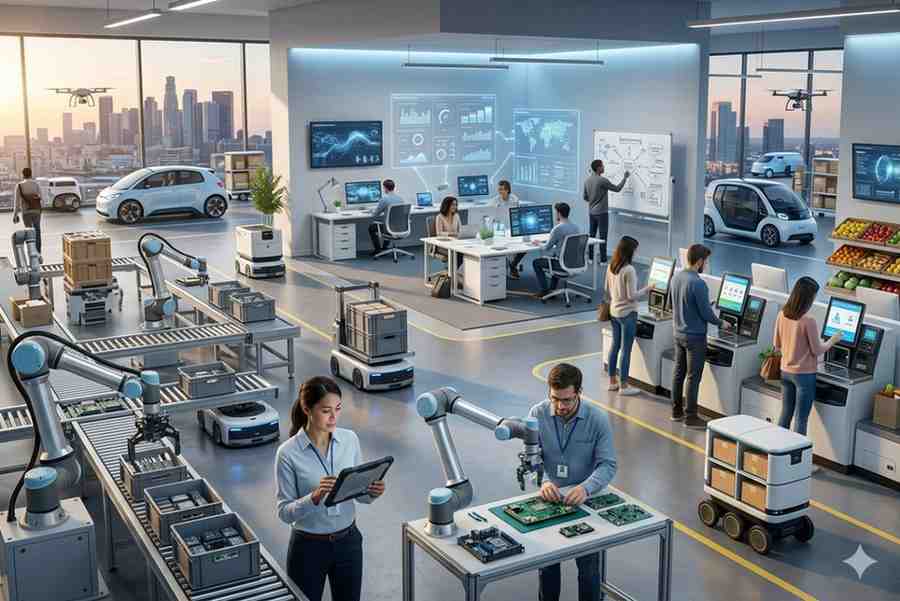
Machines Performing Human Tasks: How Automation Is Redefining Work and Daily Life
Lisa Park • October 27, 2026
For centuries, humans have built tools to make life easier. From the wheel to the printing press to modern computers, each invention has pushed the boundary of what machines can do. Today, we are witnessing a major leap: machines are no longer just assisting humans—they are increasingly performing tasks that once required human intelligence, judgment, and even creativity.
This shift, powered by robotics, artificial intelligence, and automation, is reshaping industries, economies, and everyday life.
What Does It Mean for Machines to Perform Human Tasks?
When we say machines are performing human tasks, we’re referring to systems that can replicate or replace activities traditionally done by people. These tasks may involve:
- Physical labor (like assembling products)
- Cognitive work (like analyzing data)
- Communication (like answering customer queries)
- Decision-making (like approving loans or detecting fraud)
The goal is not always to replace humans completely, but to perform tasks faster, more accurately, and at scale.
1. Manufacturing: The First Major Shift
Manufacturing was one of the earliest industries transformed by machines performing human tasks.
- Robotic arms assemble cars and electronics
- Automated systems handle packaging and quality checks
- Machines operate continuously without fatigue
Factories that once relied heavily on manual labor now function with high levels of automation, improving speed and precision while reducing human error.
2. Transportation: From Drivers to Autonomous Systems
Transportation is undergoing a major transformation with the rise of autonomous technology.
- Self-driving cars navigating roads using sensors and AI
- Drones delivering packages without human pilots
- Automated trains and metro systems
These systems replicate human driving and navigation skills using cameras, radar, and machine learning algorithms.
3. Customer Service: Machines as Communicators
One of the most visible examples of machines performing human tasks is in customer service.
- Chatbots answer customer queries instantly
- Voice assistants handle phone support
- AI systems resolve complaints and process requests
These systems simulate conversation, understand intent, and provide solutions—tasks once handled exclusively by human agents.
4. Healthcare: Machines Supporting Medical Work
In healthcare, machines are increasingly performing tasks that require precision and analysis.
- AI reading medical scans like X-rays and MRIs
- Robotic systems assisting in surgeries
- Automated lab testing and diagnostics
While doctors remain essential, machines now assist or perform critical steps in diagnosis and treatment, often improving accuracy and speed.
5. Finance: Machines Making Decisions
Financial institutions rely heavily on automated systems to handle complex tasks.
- Algorithms detecting fraudulent transactions
- Systems approving or rejecting loan applications
- Trading bots executing stock market decisions in milliseconds
These machines process enormous amounts of data and make decisions based on patterns that humans might miss.
6. Agriculture: Machines Working the Land
Even farming, one of the oldest human activities, is becoming automated.
- Autonomous tractors plow and harvest crops
- Drones monitor soil and crop health
- Smart irrigation systems manage water usage
These technologies replicate manual farming tasks with greater efficiency and less waste.
7. Retail: Automated Shopping Experiences
Retail has embraced automation to improve both operations and customer experience.
- Self-checkout machines replacing cashiers
- Inventory robots tracking stock levels
- AI systems recommending products to shoppers
In some stores, entire transactions can happen without human staff involvement.
8. Education: Machines as Teachers and Assistants
Education is also being reshaped by intelligent systems.
- AI tutors explaining concepts to students
- Automated grading systems for assignments
- Personalized learning platforms adjusting to student progress
These tools replicate aspects of teaching, offering support outside traditional classrooms.
9. Warehousing and Logistics: The Rise of Smart Operations
Modern supply chains depend heavily on automation.
- Robots pick and pack items in warehouses
- Systems sort and route packages
- AI predicts demand and manages inventory
Companies can now move goods faster and more efficiently with fewer human workers in physical roles.
10. Creative Fields: Machines Entering Imagination
One of the most surprising developments is machines performing creative tasks.
- AI generating music and artwork
- Tools writing articles, scripts, and marketing content
- Systems editing videos and images
While human creativity remains unique, machines can now imitate styles, patterns, and structures with impressive accuracy.
Why Are Machines Taking Over These Tasks?
Several factors drive this transformation:
- Speed: Machines work faster than humans
- Accuracy: Reduced chances of error
- Cost efficiency: Lower long-term operational costs
- Scalability: Ability to handle large workloads
- 24/7 operation: No need for rest or breaks
The Human Impact: Opportunity and Challenge
While machines performing human tasks bring efficiency, they also raise important questions.
Positive impacts:
- Reduced workload for repetitive tasks
- Increased productivity
- New job roles in technology and management
Challenges:
- Job displacement in certain industries
- Need for new skills and training
- Ethical concerns about decision-making by machines
The future of work will likely involve collaboration between humans and machines rather than complete replacement.
The Future: Collaboration, Not Replacement
Despite rapid advancements, machines still lack true human qualities such as emotional understanding, moral judgment, and deep creativity.
- Humans handle strategy, empathy, and complex judgment
- Machines handle repetition, speed, and data-heavy tasks
This partnership can lead to more efficient systems and new opportunities for innovation.
Final Thoughts
Machines performing human tasks is not just a technological trend—it is a fundamental shift in how society operates. From factories to hospitals, from classrooms to homes, automation is becoming deeply integrated into everyday life.
The key challenge moving forward is not stopping this change, but guiding it wisely—ensuring that technology enhances human potential rather than diminishing it.